Lumopt Lumopt

How to Choose the Right DWDM Transceiver?

Time:2026-09-10 Author:Oliver
0%

Choosing the right DWDM transceiver is no longer a simple matter of matching wavelength and port type. Traffic growth, fiber condition, power limits, and network distance all influence the decision. Cisco’s Annual Internet Report projected global Internet traffic would reach 396 exabytes per month by 2022. That pressure continues to shape optical upgrades. More capacity is needed. Yet capacity alone can mislead.

The Dell’Oro Group’s Optical Transport market research highlights sustained demand for coherent technology, driven by cloud services, data centers, and 5G transport. Sterling Perrin, Vice President at Dell’Oro Group, has stated, “Coherent optics are moving deeper into the network.” This shift matters when selecting a DWDM transceiver for regional links, metro aggregation, or data-center interconnection. A 400G module may appear attractive, but its reach, modulation format, forward-error correction, and thermal profile must match the actual route. Fiber loss can change the answer.

Practical evaluation should begin with measurable conditions. Check channel spacing, optical budget, connector cleanliness, and interoperability with the existing muxponder or switch. Review operating temperature carefully. A laboratory result is not always a field result. The Linux Foundation and Telecom Infra Project have also encouraged open, interoperable optical systems, making vendor compatibility increasingly important. Still, open standards do not remove every risk. Firmware behavior, vendor support, and replacement availability deserve equal attention.

The best choice is rarely the highest-speed module. It is the transceiver that fits the route, budget, and maintenance reality. Some assumptions will be wrong. Testing before purchase remains wise.
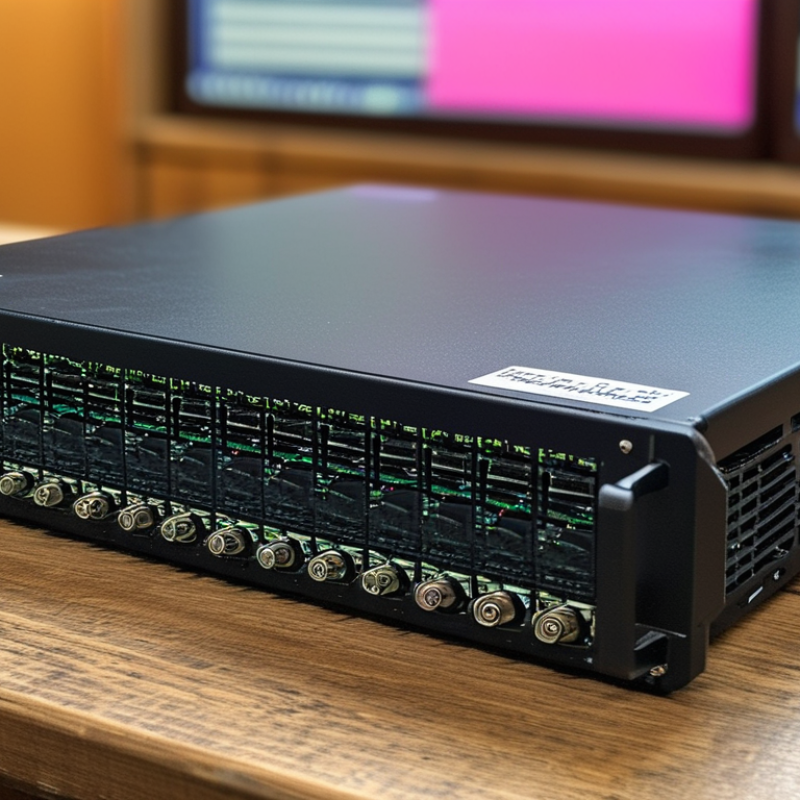
How to Choose the Right DWDM Transceiver?

Define DWDM Transceivers and Their Role in Optical Networks

How to Choose the Right DWDM Transceiver?

Define DWDM Transceivers and Their Role in Optical Networks

DWDM transceivers are optical modules that transmit and receive data on specific light wavelengths. DWDM means dense wavelength-division multiplexing. It allows many independent signals to travel through one fiber pair. Each transceiver converts electrical data into light, then changes received light back into electrical data. Think of it as a precise traffic controller for optical networks.

These modules support data center interconnects, metro networks, and long-distance fiber links. Their wavelength must match the optical channel plan. Their transmission reach must also fit the actual route, including splices, connectors, and passive components. A module rated for 80 kilometers may perform poorly on a link with heavy loss. Link budgets matter. So does dispersion.

Choosing the right DWDM transceiver requires checking line rate, wavelength spacing, fiber type, connector design, temperature range, and monitoring functions. Compatibility with the multiplexer, demultiplexer, and network equipment is essential. Practical testing can reveal issues that specifications miss, such as unstable power levels or difficult installation. I have learned that “plug and play” is not always simple. Engineers should verify optical power, receiver sensitivity, digital diagnostics, and forward error correction before deployment. A careful test plan may seem slow, but one overlooked parameter can cause intermittent faults and expensive troubleshooting.

How to Choose the Right DWDM Transceiver?

DWDM transceivers convert electrical data into precisely spaced optical wavelengths and combine multiple wavelengths onto a single fiber. The chart shows the theoretical number of wavelength channels that can fit into a 4 THz C-band at common DWDM grid spacings.

A smaller channel spacing provides more potential channels but requires tighter wavelength control and stronger compatibility between the transceiver, multiplexer, and optical line system. Actual deployments may use fewer channels because of guard bands, amplifier characteristics, link loss, and system design.

Assess Fiber Type, Wavelength, and Transmission Distance

Choosing a DWDM transceiver starts with the installed fiber, not the module label. Single-mode fiber is normally required for long-haul DWDM links. Multimode fiber creates excessive modal dispersion and is unsuitable for dense wavelength channels. ITU-T G.652.D specifies maximum attenuation of 0.4 dB/km at 1310 nm and 0.3 dB/km at 1550 nm. That difference matters across a 100-kilometer route.

Wavelength selection must match the fiber’s loss profile and the network grid. The 1550-nanometer region usually offers lower attenuation and supports optical amplification. ITU-T G.694.1 defines DWDM frequency grids, including 100 GHz channel spacing. Check whether the transceiver uses the required channel frequency, spacing, and wavelength tolerance. A small mismatch can prevent reliable pairing. It happens.

Transmission distance should include more than the advertised reach. Calculate fiber loss, connector loss, splice loss, dispersion, and engineering margin. A 120-kilometer specification may assume ideal attenuation and limited connectors. Real routes often contain patch panels, repairs, and aging fiber. Optical power budgets should be verified against the transceiver datasheet and measured with an optical power meter. TeleGeography’s 2024 international bandwidth research shows continuing growth in cross-border capacity, increasing pressure on existing fiber routes. More capacity does not remove physical limitations. A clean spreadsheet can still mislead. Review the actual link record before selecting wavelength, modulation, and reach.

Match Data Rate, Interface, and Network Compatibility

How to Choose the Right DWDM Transceiver?

Match Data Rate, Interface, and Network Compatibility

Choosing the right DWDM transceiver begins with matching its data rate to the equipment at both ends. A 100G optic cannot solve a 40G port limitation. Check the switch, router, and line card specifications before ordering. Confirm whether the stated rate applies per wavelength or across all channels. This detail is easy to miss. It caused confusion during one network upgrade I reviewed. Engineers had measured total capacity, not individual optical lanes. Also verify reach, wavelength grid, and power budget. A long-distance module may be unnecessary for a short data center link.

Interface type matters just as much. Inspect the host connector, lane arrangement, and electrical signaling standard. A transceiver with the correct speed can still fail if the cage or breakout design differs. Compare duplex fiber requirements with the installed patching. Single-mode fiber is common for DWDM, but connector polarity and cleanliness remain practical concerns. Test insertion loss with calibrated equipment, not visual inspection alone. Small contamination can create intermittent errors.

Network compatibility includes more than a matching plug. Confirm wavelength plans, channel spacing, modulation, FEC behavior, and management support. Consider connectors, splices, and fiber aging when calculating optical budget. Ask whether the network accepts third-party modules or requires coded authorization. That question belongs in procurement. I once treated interoperability as a checklist item and missed a firmware dependency. Validate one link in a test rack before deploying a full batch. Real traffic often reveals timing or alarm issues that laboratory checks overlook.

Compare Reach, Power Budget, and Environmental Requirements

Choosing a DWDM transceiver starts with the real path, not the advertised distance. OIF’s 400ZR Implementation Agreement defines an 80 km class for suitable single-span links, but field performance depends on fiber loss, connectors, splices, and amplifier placement. A useful planning value is 0.25 dB/km at 1550 nm. For a 60 km route, fiber loss alone may approach 15 dB. Add patching and aging margins. The transceiver’s power budget must exceed this total, with reasonable headroom.

Reach and power budget are related, but they are not interchangeable. A longer-reach optic may require stronger launch power, better dispersion control, or stricter OSNR performance. The ITU-T G.698.2 framework highlights interoperability conditions for multichannel optical systems, reminding engineers to check wavelength spacing and line-system limits. I have seen designs fail on paper because engineers counted kilometers, not losses. Distance was not the problem.

Tips: Measure the actual route. Record every connector and splice. Keep at least 2–3 dB of engineering margin when conditions are uncertain. Environmental requirements deserve equal attention. Commercial modules commonly support 0°C to 70°C, while industrial versions may cover -40°C to 85°C. Telcordia GR-468 reliability guidance supports careful qualification of optoelectronic components, but a compliant module can still perform poorly inside a hot, poorly ventilated cabinet. Check temperature, humidity, airflow, and power stability at the installation site. The cheapest choice may become the least reliable one.

Evaluate Standards, Reliability, Cost, and Future Scalability

Choosing a DWDM transceiver starts with standards, not the lowest quoted price. Check its wavelength grid, channel spacing, line rate, modulation, and host interface against the existing network. A module may fit physically yet fail interoperability because firmware or optical parameters differ. Confirm relevant ITU-T, IEEE, or multi-source agreement requirements through datasheets and vendor test records. Lab validation matters. Test link budgets, FEC behavior, alarms, and digital monitoring before field installation. Small mismatches become expensive at the rack.

Reliability should be judged under real conditions, including temperature swings, vibration, dust, and repeated power cycles. Review mean time data carefully; a headline figure does not replace burn-in results or failure analysis. Check optical power limits, receiver sensitivity, diagnostic accuracy, and replacement procedures. During evaluation, record readings from both ends of the link. That simple habit can expose unstable optics. Purchase cost is only one part of ownership. Include power consumption, cooling load, testing labor, spares, licenses, and downtime exposure in the calculation. Cheaper hardware can become costly when every failure requires urgent replacement.

Future scalability requires more than a higher data-rate label. Ask whether the transceiver supports additional channels, longer reach, coherent upgrades, and mixed-speed operation. An open, tunable design may reduce future truck rolls, but it can raise configuration complexity. Document compatibility boundaries before ordering. Ideally, test a small batch in the actual fiber route. Yet forecasts are imperfect. Traffic growth, power limits, and changing standards can overturn a neat five-year plan. Leave rack space, optical margin, and budget headroom where practical. Revisit those assumptions annually.

FAQS

: How do I match a DWDM transceiver with my equipment?

: Check the switch, router, and line card data rates. Confirm whether the rate applies per wavelength or across all channels. A higher rate cannot fix a slower host port. This detail is easy to overlook.

What interface details should I verify?

Check the host connector, lane arrangement, cage type, and electrical signaling. Confirm the breakout design before ordering. Match duplex fiber and connector polarity. A correct speed may still fail.

How can I confirm network compatibility?

Review wavelength plans, channel spacing, modulation, FEC behavior, and management support. Check whether coded authorization is required. Ask during procurement. I once missed a firmware dependency.

How should I calculate the optical power budget?

Measure the actual fiber route. For 60 kilometers, fiber loss may approach 15 dB at 0.25 dB/km. Add connector, splice, aging, and patching losses. Keep about 2–3 dB of engineering margin when conditions are uncertain.

Is advertised reach enough for choosing a module?

No. Reach depends on fiber loss, dispersion, receiver sensitivity, and amplifier placement. A long-distance module may be unnecessary for a short data center link. Distance alone can mislead.

What environmental conditions should I consider?

Check temperature, humidity, airflow, dust, vibration, and power stability. Commercial modules often support 0°C to 70°C. Industrial versions may cover -40°C to 85°C. A compliant module can still fail inside a hot cabinet.

How should I compare total cost?

Include purchase price, power use, cooling, testing labor, spares, licenses, and downtime. Cheap hardware may require urgent replacement later. That risk is easy to underestimate. The cheapest option may not stay cheap.

How can I prepare for future network growth?

Check support for extra channels, longer reach, coherent upgrades, and mixed-speed operation. Leave rack space, optical margin, and budget headroom. Test a small batch on the real fiber route. Five-year forecasts are imperfect.

Conclusion

Choosing the right DWDM transceiver is essential for building an efficient, reliable, and scalable optical network. A DWDM transceiver combines optical transmission and reception in a single module, enabling multiple wavelengths to travel over the same fiber and increasing network capacity. Selection should begin with the fiber type, operating wavelength, and required transmission distance. These factors directly affect signal quality, compatibility, and the need for amplification or dispersion management.

It is also important to match the transceiver’s data rate, interface, and network architecture with existing equipment. Compare its transmission reach and power budget to ensure stable performance across the intended link, while considering operating temperature, power consumption, and installation conditions. Finally, review applicable industry standards, reliability specifications, warranty support, total cost, and future expansion needs. A well-chosen DWDM transceiver should meet current performance requirements while remaining compatible with future upgrades, helping organizations improve network capacity without unnecessary complexity or expense.

Oliver

Oliver

Oliver is a seasoned marketing professional with a wealth of expertise in driving brand awareness and engagement. With a deep understanding of our company's product offerings, he consistently delivers high-quality content that enriches our professional blog. His insights not only shed light on......